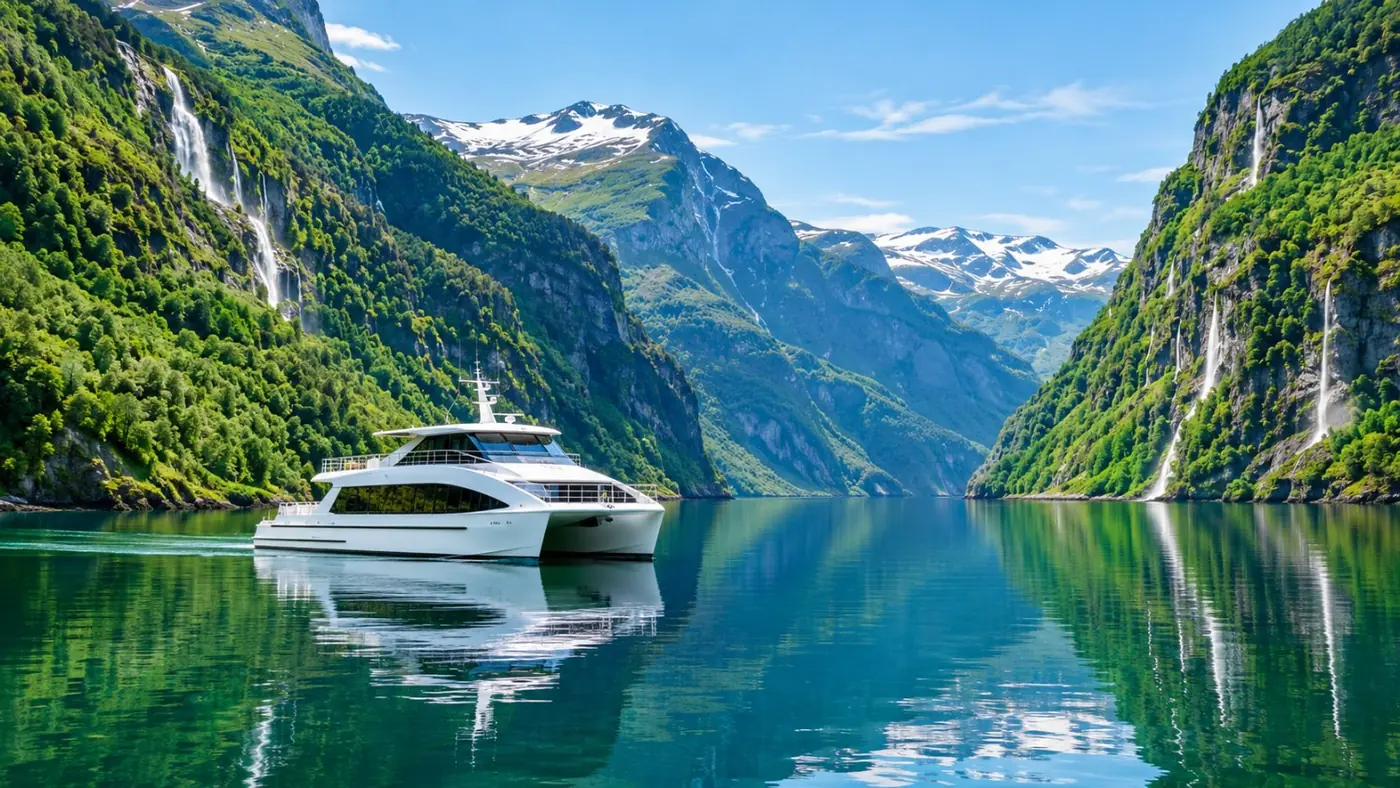
Booking choice: The sightseeing cruise, 75 min or 2 hours. Check dates Tour details
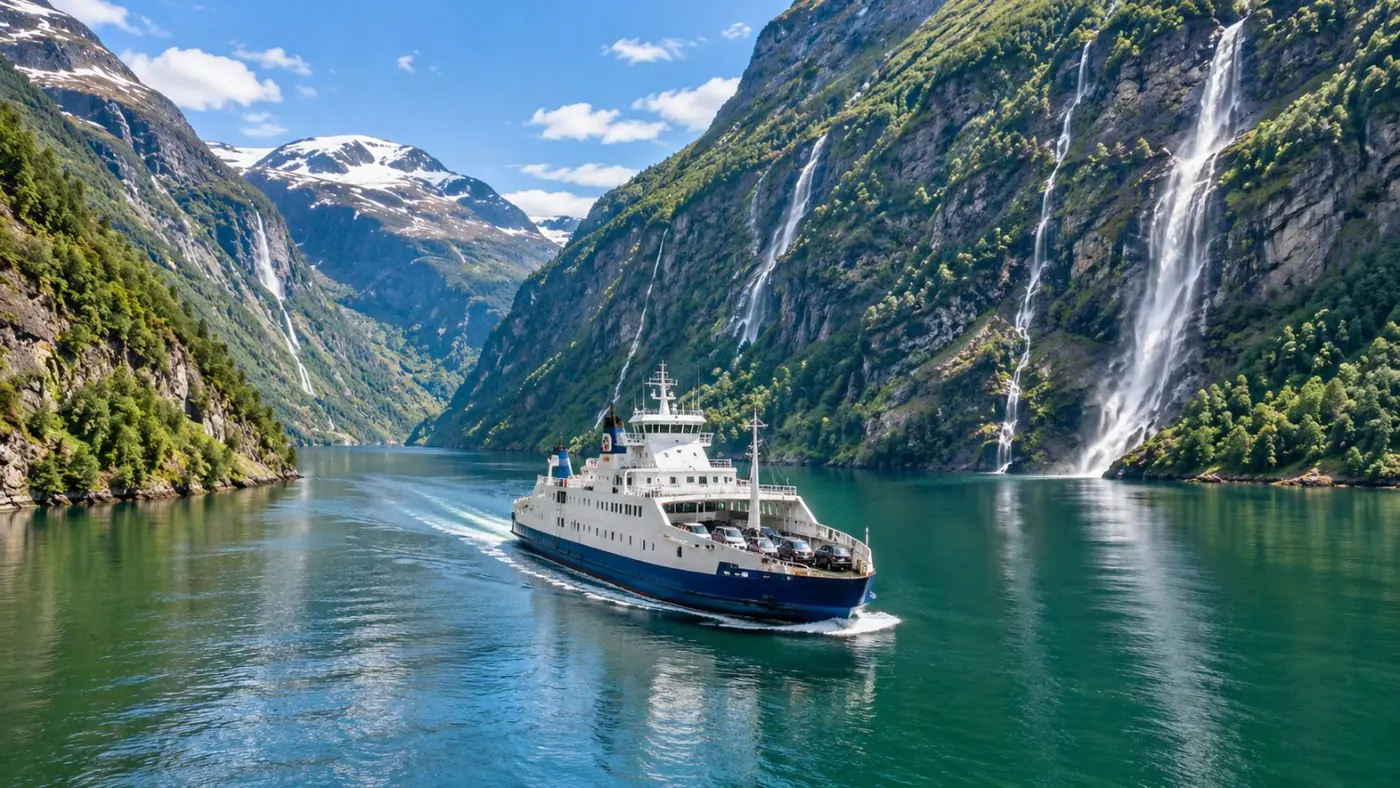
For years the Geirangerfjord's summer soundtrack was diesel. Sightseeing boats, car ferries and cruise ships all ran their engines inside a narrow, 15 km rock corridor. That ended for the smaller boats on 1 January 2026, when Norway's zero-emission rule for the World Heritage fjords took effect.
The rule is real, but it is not the cruise ban some headlines suggested. This post sets out what was decided, which ships it covers, and what you will actually see and hear on the fjord in 2026 and 2027. Everything here was checked against the Norwegian government, the Norwegian Maritime Authority and the port's own documents on 19 October 2026.
The quick answer
Passenger ships under 10,000 gross tonnes must be zero-emission inside the Geirangerfjord since 1 January 2026; ships of 10,000 GT or more (the big cruise ships) only from 1 January 2032. The sightseeing boats went hybrid or electric, the old diesel ferry service broke down, and large cruise ships still anchor off the village all summer.
What did Norway decide for the World Heritage fjords?
Parliament asked for zero-emission tourist ships and ferries "by 2026 at the latest" in 2018. The final rule, adopted on 14 April 2025, phased it in: small ships from 2026, large ones from 2032.
The idea is older than most of the boats now using it. On 3 May 2018 the Storting adopted request decision no. 672, asking the government to introduce zero-emission requirements for tourist ships and ferries in the World Heritage fjords "as soon as technically feasible, and by 2026 at the latest". The wording is quoted in the Norwegian Maritime Authority's consultation paper.
What came out seven years later was softer for the cruise industry. The rule the government announced on 14 April 2025 is a new § 10 b in the Environmental Safety Regulation (circular RSR 04-2025). Ships under 10,000 GT must comply from 1 January 2026. "For større passasjerskip gjelder samme krav fra 1. januar 2032": larger passenger ships get the same requirement from 2032. In parliament that was described, not kindly, as a postponement "from 2026 to 2032".
The climate minister at the time called it an important breakthrough for the World Heritage fjords. Critics in parliament called it a delay. Both are true.
| Date | What happened | Who it affects |
|---|---|---|
| 3 May 2018 | Storting asks for zero emissions by 2026 at the latest | All tourist ships and ferries |
| Nov 2024 | Government confirms the split: 2026 for small ships, 2032 for large | Everyone |
| 14 Apr 2025 | Final rule adopted as § 10 b | Passenger ships with over 12 passengers |
| 1 Jan 2026 | Zero emission required under 10,000 GT | Sightseeing boats, ferries, small expedition ships |
| 31 Dec 2029 | Last possible day of any dispensation | Small ships that sailed here in 2024 |
| 1 Jan 2032 | Zero emission required from 10,000 GT up | Large cruise ships |
Which ships and which fjords does the rule cover?
Every passenger ship carrying more than 12 passengers, inside five fjords: Geirangerfjorden, Sunnylvsfjorden, Tafjorden, Nærøyfjorden and Aurlandsfjorden.
"Passenger ship" is wide on purpose. It catches cruise ships, car ferries, fast craft and the sightseeing boats from the village quay. The rule bites the moment a ship is inside the protected area, even for part of a trip. The five fjords are the two arms of UNESCO's West Norwegian Fjords site: the Geirangerfjord with Sunnylvsfjorden and Tafjorden in Møre og Romsdal, and the Nærøyfjord with the Aurlandsfjord further south.
Zero emission means no direct CO2 or methane from the ship; a pilot fuel is allowed. Biogas counts only under tight conditions. It has to be bunkered within the month before entry and "kept separate from fossil fuel right up to bunkering", so a ship cannot buy certificates for grid gas and call it green. Ships must also plug into shore power wherever it is available and compatible.
There are narrow exits. County-contracted fast ferries are exempt, and so are scheduled services diverted by roadworks or emergencies. Ships under 10,000 GT that already sailed the fjords in 2024 can apply for a dispensation of up to two years at a time, and never beyond 31 December 2029. Newcomers get nothing: they have had to comply since day one. Heritage-protected ships may apply separately.

Why can big cruise ships still sail into Geiranger?
Because ships of 10,000 GT or more are only bound from 1 January 2032. Until then they come in under the port's older environmental rules.
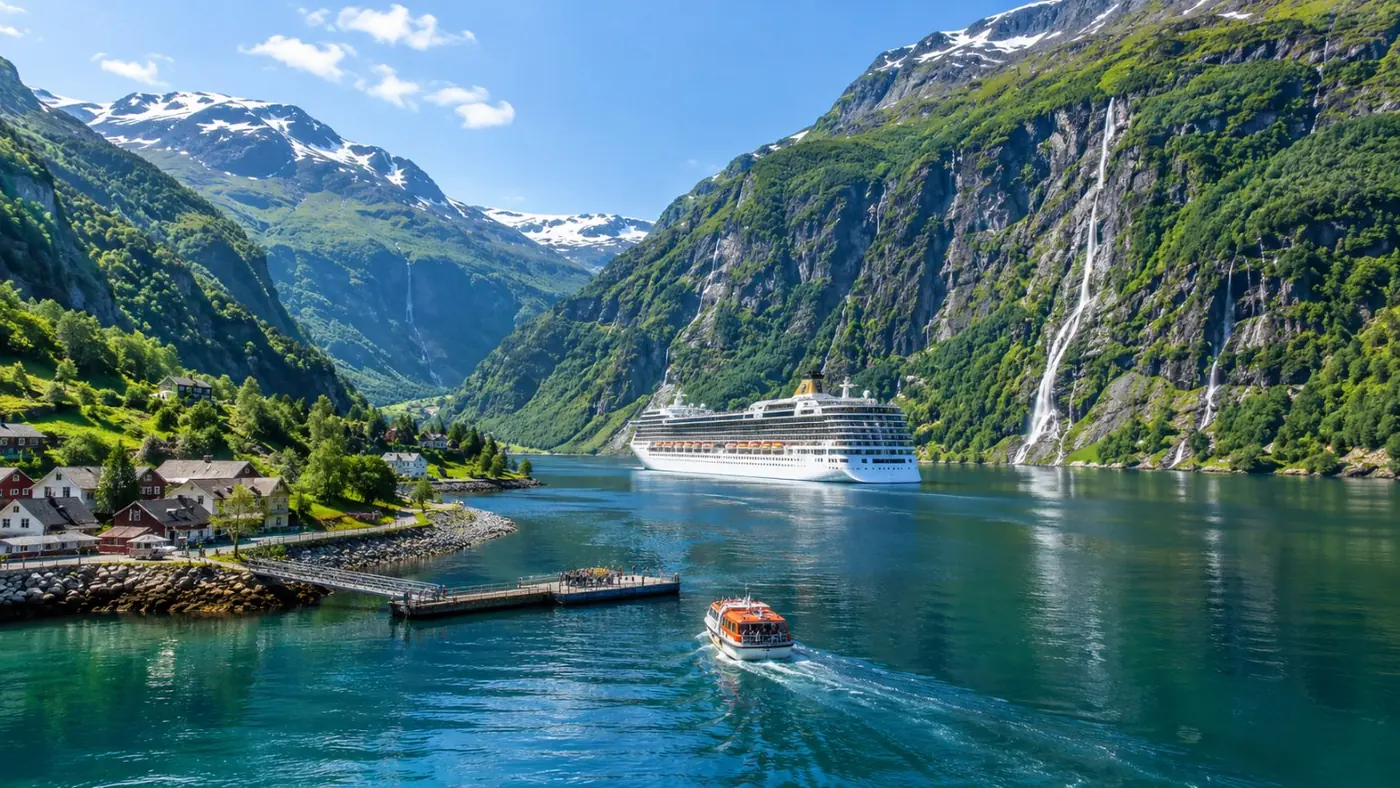
This is the part that confuses people. Large cruise ships are not banned in 2026, and they will not be in 2027. The port planned 120 calls at Geiranger for 2026, down from 137 in 2025, with the season opening on 15 April and closing on 7 November.
They do sail under house rules. Stranda's port document for 2026 bans incinerators and any discharge of sewage, grey or black water, keeps ships' whistles and pool music to 08:00 to 18:00, and caps speed at 8 knots, then 5 knots in the inner fjord. One ship a day can use the SeaWalk floating pier; the rest anchor 400 to 1,000 m out and tender passengers ashore. Between 20 June and 10 August, the port works to a cap of about 6,000 cruise passengers a day.
Our take: if you arrive by cruise ship in 2026 or 2027, the rule changes little about your ship and a lot about the small boats you board once you are ashore. Planning that day is covered in Geiranger from a cruise ship.
What does the rule mean for a visitor in 2026 and 2027?
Quieter boats, fewer small cruise ships, a broken ferry link and the same big ships as before. Passenger numbers at Geiranger already fell in 2025.
You will hear it first. The 2-hour sightseeing cruise from the village now runs on MS Geirangerfjord III, a 280-seat hybrid-electric catamaran that VISIT Geiranger markets as a "silent" fjord cruise. It was one of three electric catamarans built by Brødrene Aa, according to Shippax. The same boat sails the day route from Ålesund. Guests notice: one wrote of "a modern electric boat" with plenty of open deck, and another of a "very clean boat without any annoying exhaust fumes".
Havila Voyages got there early. Its coastal ships have sailed in on battery power, "silently and emission free", since Havila Castor first did it in June 2022 (Havila). The ships are large enough to escape the 2026 rule, which makes the choice more interesting.
Then the losers. Small expedition ships under 10,000 GT without a dispensation can no longer come in, and ships that fall short of the fjord's limits have started calling at Eidsdal and Åndalsnes just outside the protected zone, as TU and NRK reported. The numbers show it. Stranda's port director blamed the new rules for a drop in passengers at both Geiranger and Hellesylt in 2025 (Nyss).
The other casualty was the old car ferry to Hellesylt. That story has its own post: the Geiranger to Hellesylt ferry in 2026.
| Port | Cruise passengers 2024 | Cruise passengers 2025 | Change |
|---|---|---|---|
| Geiranger | 370,735 | 321,268 | Down about 13% |
| Hellesylt | 127,791 | 84,320 | Down about 34% |
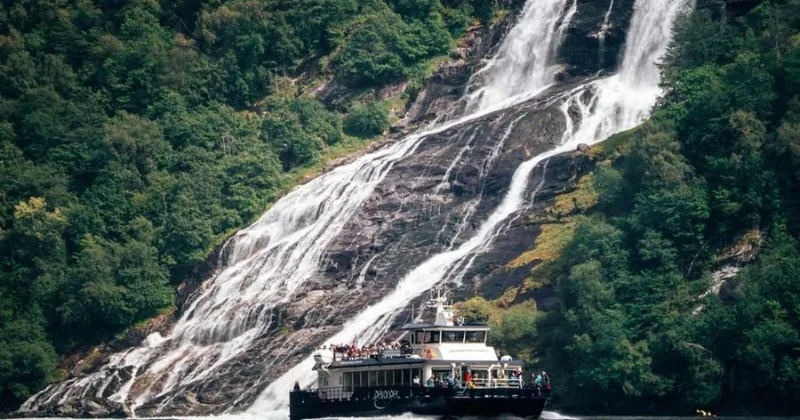
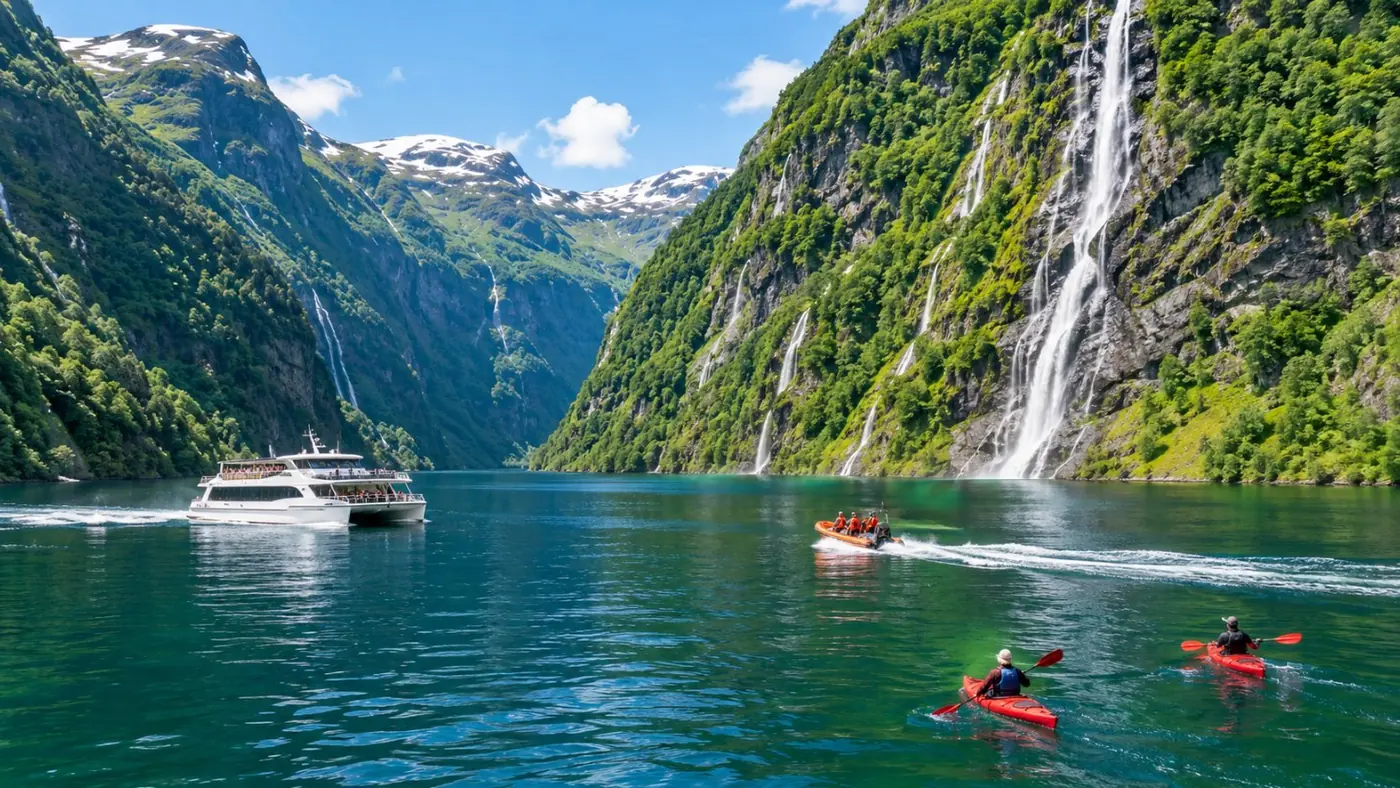
The 2-hour option runs on the hybrid-electric Geirangerfjord III: the quietest way past the Seven Sisters without paddling.
Explore the sightseeing cruise Tour detailsWhich boats on the Geirangerfjord are electric?
MS Geirangerfjord III (the 2-hour cruise and the Ålesund route) is hybrid-electric, Havila's ships come in on batteries, and the Hellesylt ferry is still waiting for its electric boats.
The booking pages blur this, and one famous name gets borrowed a lot. Here is what each boat is, as of October 2026.
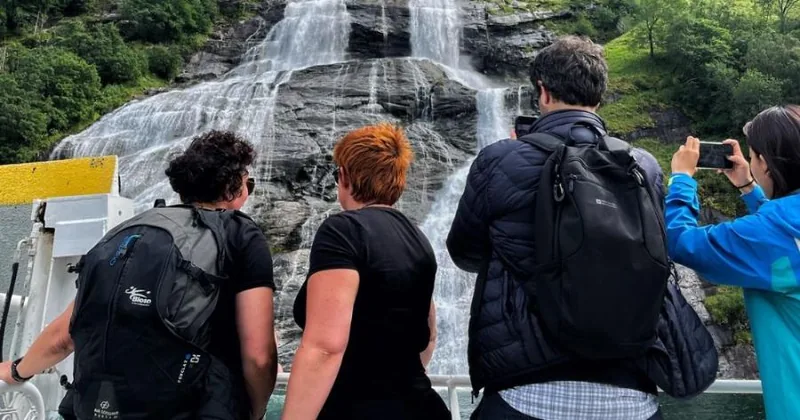
On the sightseeing tour from the village, the length decides the boat. The 75-minute trip uses the smaller classic MS Geirangerfjord, which takes 165 passengers. The 2-hour trip uses the hybrid catamaran. Fjord Tours also sells a hybrid-electric sightseeing trip from 1 June to 30 September. The cheapest hour on the water, the waterfall tasting boat, runs on MS Keiser Wilhelm, and guests write about the lack of fumes.
One correction, because it turns up in travel articles: Future of The Fjords and its sister Legacy of the Fjords are all-electric boats, but they sail the Nærøyfjord between Flåm and Gudvangen (Baird Maritime). They do not sail the Geirangerfjord.
| Boat | Route | Power |
|---|---|---|
| MS Geirangerfjord III | 2-hour cruise from Geiranger; Ålesund to Geiranger | Hybrid-electric, 280 seats |
| MS Geirangerfjord | 75-minute classic cruise from Geiranger | Classic boat, 165 seats |
| Havila coastal ships | Coastal route, into the fjord April to August | Battery inside the fjord |
| Skånevik, Røsund | Geiranger to Hellesylt car ferry | Older ferries until electric ones arrive |
| Future of The Fjords | Flåm to Gudvangen, Nærøyfjord | All-electric, not on this fjord |
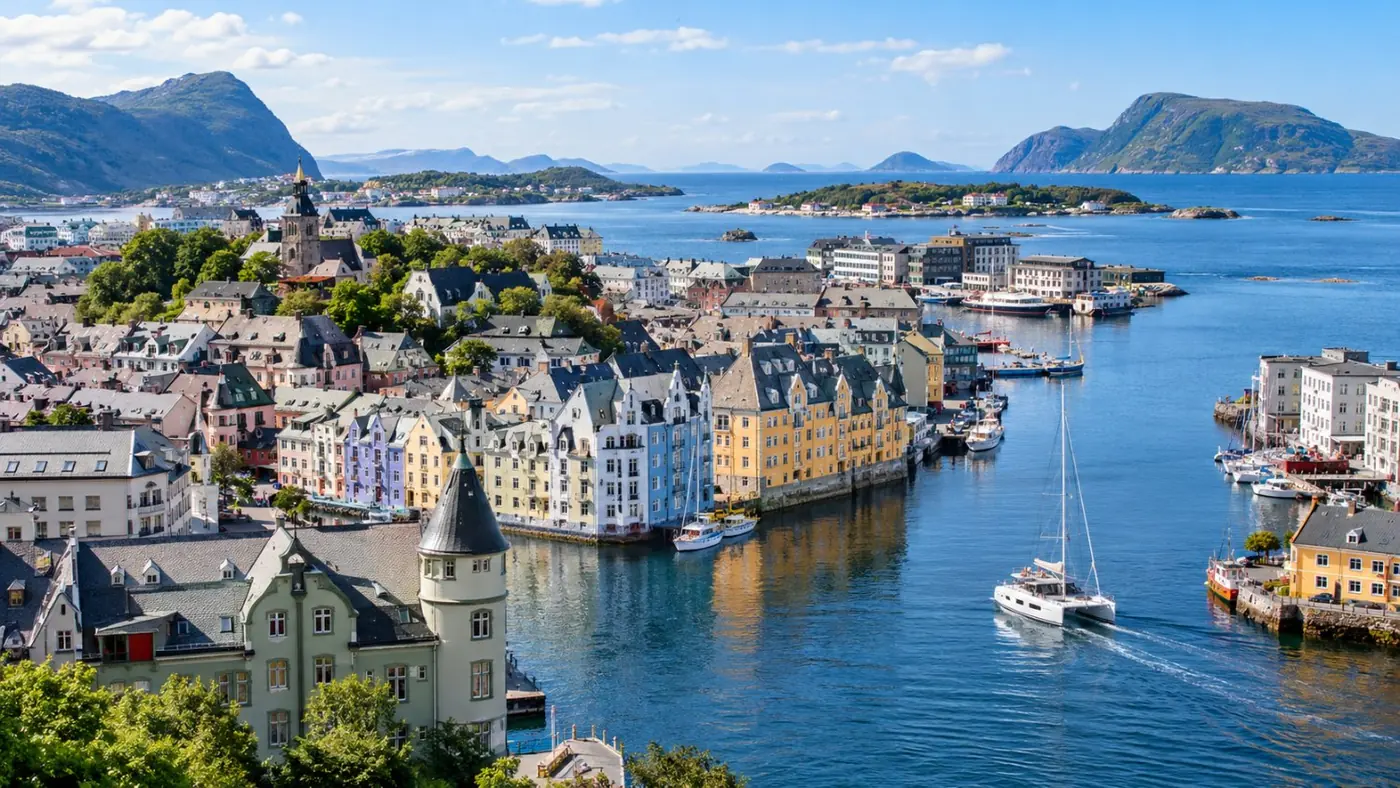
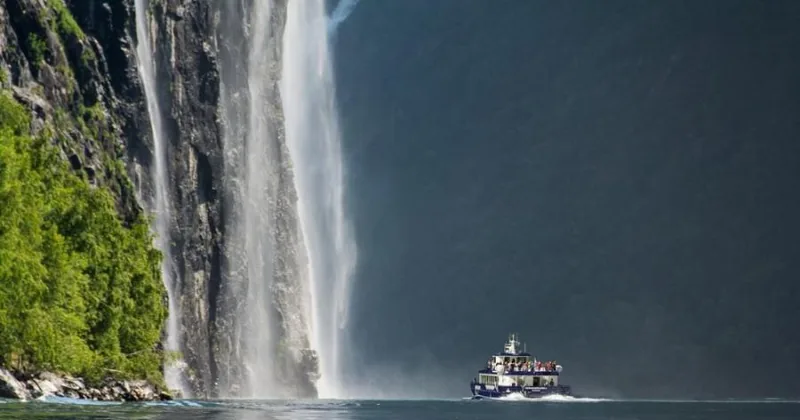
Arrive or leave Geiranger by water on the hybrid catamaran: three quiet hours to or from Ålesund.
Check dates for the one-way silent cruiseWhat happens between now and 2032?
Dispensations for small ships run out by the end of 2029, the Hellesylt route is promised electric ferries, and big ships face the full rule from 1 January 2032.
Three dates matter. The first is the end of 2029, when the last dispensation for an older small ship expires. Anything still sailing on diesel under 10,000 GT has to be gone or converted by then.
The second is whenever the Hellesylt ferry goes electric. Vestlandske, the company behind the crossing sold by Norway's Best, is converting MF Jotunheim and MF Hjørungavåg to battery power with 17 MWh of batteries and Enova support (Shippax, November 2025). The plan was the 2026 season. As of 19 October 2026 the operator's page says the new electric ferries are "under construction" and older boats run the route.
The third is 1 January 2032, when cruise ships of 10,000 GT and more must also arrive without emissions. Stranda's port has made a large investment in quay and charging infrastructure with the charging company Plug (Nyss). Which lines will still come in 2032, and on what, is the open question. For the seasons in between, see the 2027 cruise season.
Frequently asked questions
Are cruise ships banned from the Geirangerfjord in 2026?
No. Only passenger ships under 10,000 gross tonnes must be zero-emission from 1 January 2026. Large cruise ships may sail in until the end of 2031, and 120 calls were planned at Geiranger for 2026.
When do large cruise ships have to be zero-emission in Geiranger?
From 1 January 2032, under § 10 b of Norway's Environmental Safety Regulation, adopted on 14 April 2025.
Is the Geirangerfjord sightseeing boat electric?
The 2-hour cruise runs on MS Geirangerfjord III, a hybrid-electric catamaran. The 75-minute cruise uses the smaller classic MS Geirangerfjord.
Does Future of The Fjords sail on the Geirangerfjord?
No. Future of The Fjords and Legacy of the Fjords are electric boats on the Nærøyfjord, between Flåm and Gudvangen.
Ready to book
Choose your boat
Free cancellation up to 24 hours before on every option. Check the live availability for your date.
Fjord & Waterfalls Sightseeing Cruise
- 75-minute classic boat or 2-hour hybrid-electric boat
- Seven Sisters, the Suitor and the Bridal Veil falls
- Free audio guide app in 12 languages
Fjord Boat Tour with Waterfall Tasting
The cheapest hour on the fjord, with a sip of the Suitor
Ålesund to Geiranger Silent Cruise, One Way
Arrive or leave by water instead of by road